LaMelo Ball Net Worth 2026 - How They Built Their Fortune
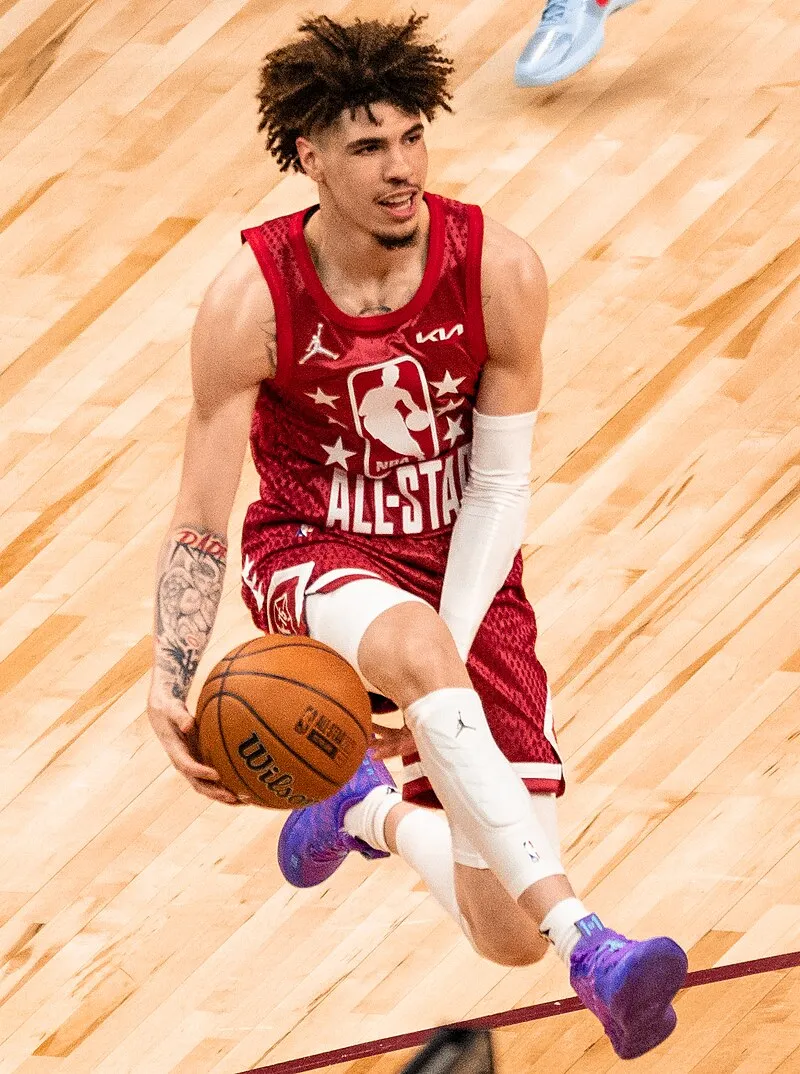
Photo of LaMelo Ball, via Wikimedia Commons
Very few athletes arrive in professional sports with a financial head start quite like LaMelo Ball's. By the time the Charlotte Hornets selected him third overall in the 2020 NBA Draft, Ball had already played professionally in Lithuania, competed in Australia's NBL, accumulated millions of social media followers, and participated in a family business venture that generated both significant revenue and considerable controversy. As of 2026, his estimated net worth is approximately $60 million — a remarkable figure for a player still in his mid-twenties.
 Photo: Charlotte Hornets, via cdn.inspireuplift.com
A Financial Timeline That Started in High School
The Ball family's decision to remove LaMelo from high school and send him to play professionally in Lithuania with BC Prienai in 2017 was unconventional by virtually any measure. At 16 years old, he was earning a professional salary — modest by NBA standards, but extraordinary for a teenager — while simultaneously building an international following that would prove invaluable in the years ahead.
A subsequent stint with the Illawarra Hawks in Australia's NBL during the 2019–20 season further elevated his draft stock and demonstrated his readiness for professional competition. By the time the draft arrived, Ball was not merely a prospect; he was already a globally recognized name.
 Photo: Illawarra Hawks, via lookaside.instagram.com
The NBA Contract: Charlotte's Prized Asset
Maxey's rookie deal with Charlotte paid him the standard scale for a third overall selection — approximately $9.5 million over two seasons, with team options extending the arrangement. His immediate impact on the Hornets, culminating in the 2021 Rookie of the Year award, accelerated the timeline toward a significant extension.
In 2022, Charlotte signed Ball to a four-year maximum rookie extension worth approximately $260 million, one of the largest extensions in NBA history at the time of signing. That contract, which took effect for the 2023–24 season, delivers annual salaries in the range of $55 to $65 million, placing him among the league's elite earners regardless of team context.
Health has been a complicating factor — Ball has missed significant time due to ankle injuries — but the Hornets have demonstrated consistent organizational commitment to their franchise cornerstone.
Puma: The Signature Shoe Deal Anchoring His Brand
Perhaps the single most consequential commercial decision of LaMelo Ball's career was his alignment with Puma Basketball in 2020. The German sportswear giant, which had recently re-entered the basketball market after a prolonged absence, identified Ball as the ideal face for their NBA revival.
The partnership has produced multiple signature shoe lines — most notably the MB.01, MB.02, and subsequent iterations — which have performed exceptionally well at retail. The MB.01, released in a range of bold colorways, became one of the more commercially successful basketball shoe launches in recent memory, generating lines outside sneaker boutiques and selling out multiple colorways within hours of release.
While the precise financial terms of the Puma agreement have not been publicly disclosed, industry analysts estimate the deal is worth between $4 million and $7 million annually, with royalty structures tied to shoe sales that could push total compensation considerably higher during peak release periods.
The Ball Family Business Ecosystem
No financial profile of LaMelo Ball can be complete without addressing the broader Ball family enterprise. Big Baller Brand, the company founded by his father LaVar Ball, has had a turbulent commercial history — marked by ambitious pricing strategies, a high-profile falling out with Lonzo Ball's management, and shifting distribution arrangements. However, LaMelo's commercial success has brought renewed attention and credibility to the family's business interests.
LaMelo has been strategic in how he publicly associates himself with the family brand, maintaining his Puma partnership as the primary commercial relationship while allowing family business activities to operate in a parallel lane. He and his brothers have also invested in various entrepreneurial ventures, including involvement in the Illawarra Hawks franchise, in which the Ball family acquired an ownership stake.
Social Media as a Revenue Engine
With a combined following across Instagram, X, and TikTok that exceeds 20 million, LaMelo Ball operates one of the most commercially potent social media platforms of any active NBA player. His content — a blend of basketball highlights, personality-driven entertainment, and fashion-forward lifestyle presentation — attracts sponsorship rates that few peers can match.
Sponsored posts and brand integrations across his social channels are estimated to generate between $2 million and $4 million annually, a figure that compounds the income flowing from his NBA salary and Puma partnership.
Fashion, Media, and Cultural Currency
Ball has demonstrated genuine interest in fashion as both a personal passion and a commercial opportunity. He has appeared at major fashion weeks, collaborated with designers, and cultivated a style identity that resonates with younger audiences. These cultural connections translate directly into brand partnership opportunities that extend well beyond traditional sports marketing.
His participation in media projects — including reality content tied to the Ball family's earlier ventures and more recent documentary-style features — has kept him visible in entertainment spaces that amplify his commercial reach.
Looking Ahead
With a max contract guaranteeing extraordinary income through the latter half of the decade, a signature shoe line with genuine market momentum, and a social media platform that functions as its own media company, LaMelo Ball's financial architecture is remarkably well-constructed for someone his age.
Injury management remains the primary variable that could alter his trajectory, both athletically and commercially. Sustained health and continued on-court excellence could realistically push his net worth past $150 million before he reaches 30. The foundation is already in place — what follows depends largely on what happens between the lines.